
Are CDs coming back next?
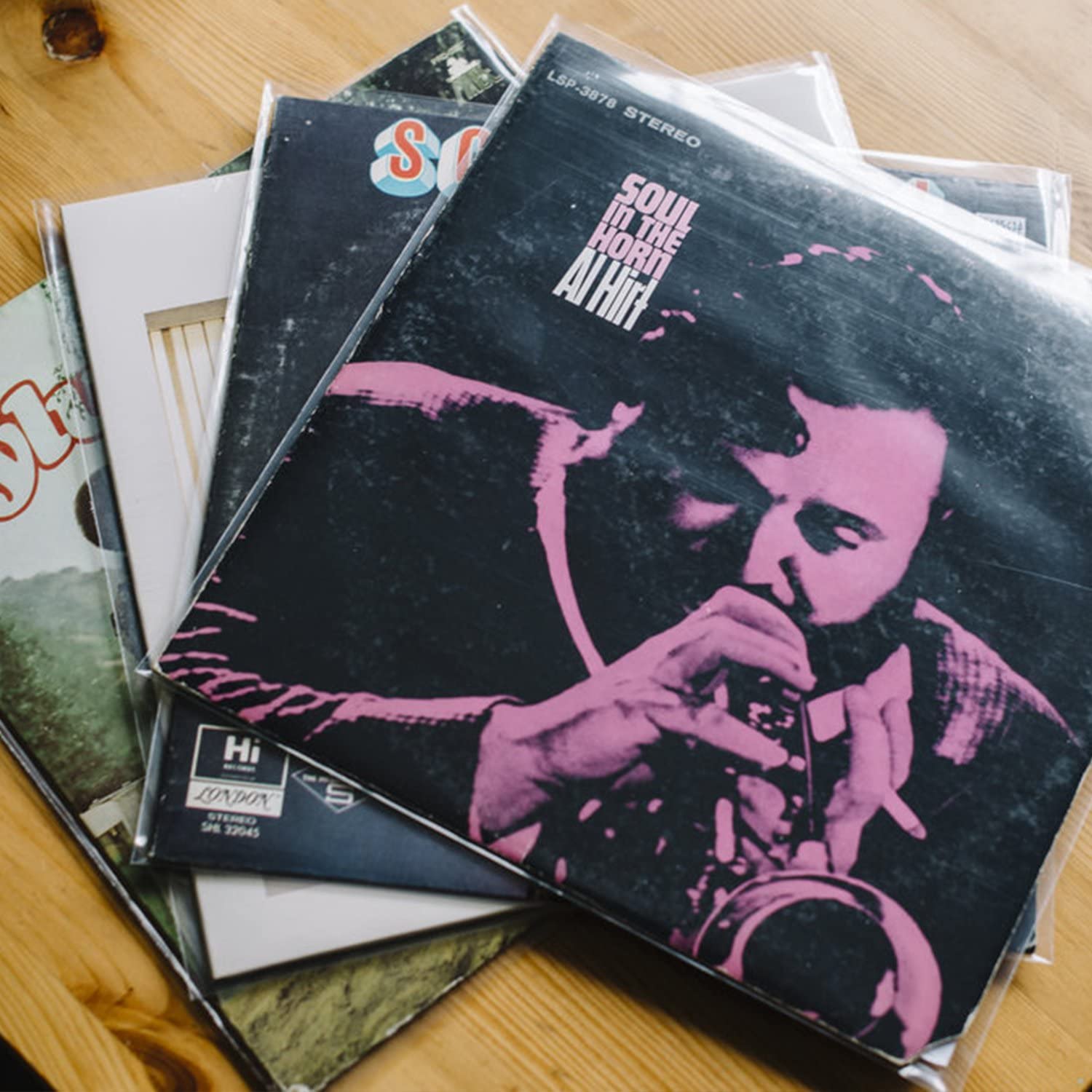
Back in 1992, my dad brought home a CD player. The benefit of this new technology? Records are smaller, shinier, they sound clearer and they don’t scratch. That last one turned out to be not true, but it was a fantastic new world for media consumption. I was a mere 6 year old but was dubious of this new thing. I spent most of my free time listening to records and recording them onto tape so I could listen on-the-go in my walkman. I liked the involved process of adjusting recording gain on the tape deck, according to high volumes on the record I was recording, just as much as the physical media vinyl records are. Everything about CDs felt too easy. Too sterile. It took what seemed like a long time (to a 6 year old) to warm up to the idea of Compact Disc, and it wouldn’t really be so until I had my first discman in 1996 (riding the bus to school with no anti-skip. Good times), that I would fully embrace CDs. Vinyl records were still fascinating and seemed like art while compact discs were seen as utilitarian to me – made with the purpose to serve the music, not additive to it.
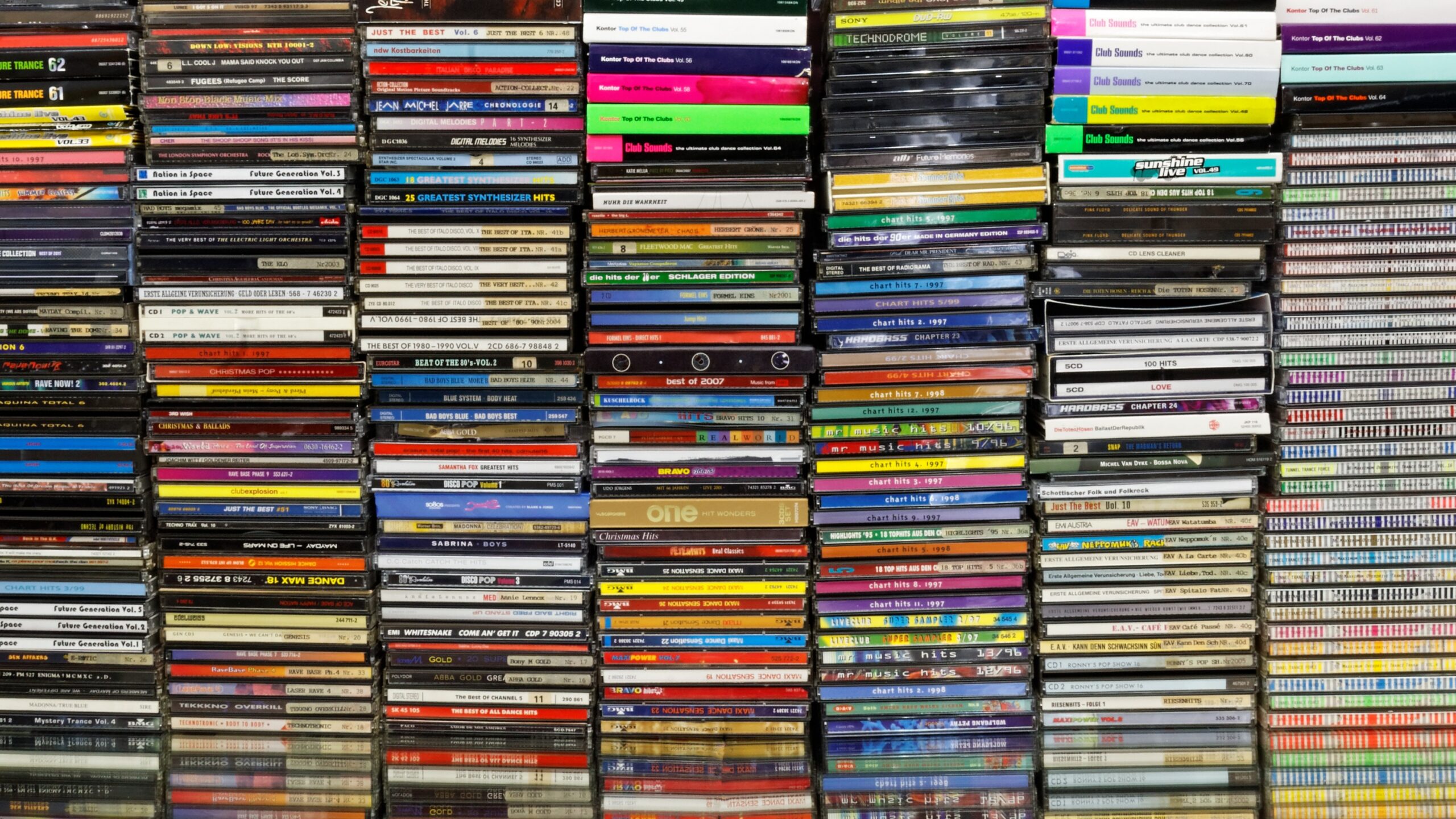
If you’re looking to get (back) into the venerable Compact Disc, you’re not alone. While we all keep hearing how vinyl record sales are soaring, a big reason for this is down to how surprising it is. To most of us that grew up with vinyl records, it is simply shocking. It is true though that in 2022, vinyl record sales surpassed those of CDs, but in reality, and according to Consumer Reports, more Americans listen to CDs than vinyl records. Their survey only involved 2,022 adults, so not a huge sample by any means, but it’s still telling. And with vinyl record prices being as high as they are, CDs might be right format to get into now.
As both a recording engineer and a recording artist, it is no secret I believe digital is the better format. Hold on, put down your pitchfork; when I say better, I mean it preserves the original reproduction closer to the source. You know the “Fi” in “Hi-Fi”? It stands for fidelity. I believe an uncompressed, high quality digital file is far more loyal to the original source as any other format. Vinyl is awesome, don’t get me wrong. I’m known to romanticize analog audio formats, but they introduce a lot of character that wasn’t necessarily there in the performance.

tangent one: SPARS code
Most recordings since the late 70’s have been recorded to a digital format to allow mixing to take place without losing quality. This is where the DDD, ADD and AAD codes in compact discs comes from. If you’re under the age of 30, you’ve probably never seen this though. This is called a SPARS code, which stands for the Society of Professional Audio Recording Services. And while it’s used to describe the provenance of a recording, it’s most often used in CD’s containing music of a certain vintage. The decoding of the three letter code is not complicated and would immediately tell you more about the recording in the album you’re looking at.
The first letter indicates the type of audio recorder used during initial recording (analog or digital).
The second letter represents the type of audio recorder used during mixing.
And finally, the third letter is for the type of mastering used (digital for CD releases, analog for cassette and vinyl).
So by this logic, a CD would always have a “D” as the third letter in its SPARS code.
I remember most of the albums I owned as a child, being into what we call today “classic rock”, would have AAD printed usually both on the disc and on the back of the jewel case. Informing this disc contained music recorded on an analog format, mixed in analog (i.e. tape), but then mastered for digital. This means that the original release of, say, Queen II in 1974, was all “AAA” and released in vinyl and tape formats. Only remastered to be released as a CD in 1986, earning, at that point and for those formats, the AAD code.
a quick dissing of tape
What about tape? We used tape for decades as a recording medium before pressing the mix of said recording onto a record, so in a way, its character is (more often than not) present in vinyl records as well. Tape has it’s set of issues, and solid reasons for me not really giving it the time of day in terms of a “cassette revival”, even though it’s the format I grew up on, and the sound shaking a cassette, and placing it into a cassette deck loader makes, is not only unmistakable, but a true ASMR moment for me. I can get into why I don’t think you should get into cassette tapes in 2025 in another post, as today we’re talking about why you should be getting into CDs instead.
tangent two: SACD
CDs aren’t the end-all be-all of digital formats of course, the real holy grail is SACD, which is (more) comparable to DVD-quality; with a significantly improved dynamic range to that of CDs as well as higher bitrate and sample rate it certainly makes the top of my list for high fidelity sources. But I’m not even talking about SACDs here since the discs are expensive, releases are limited and players can be hard to find. For today, I’ll stick to traditional, affordable and available CDs.
why should you get into CDs?
I’ll cut to the chase here, CD’s are available, you can find them used in fantastic shape for under $5 a piece, they sound great and are a honest-to-goodness physical format that you can own, feel and read through liner notes, sometimes lyrics, artist’s thank yous and enjoy without an internet connection.
Back in my day, bands would recommend other bands they’re into in the booklet and some record labels would put hype stickers on the CD wrapper saying “FFO” (For Fans Of) to entice the audience of, say, Jimmy Eat World, Weezer, The Starting Line, Good Charlotte or Simple Plan, to buy this new “All-American Rejects” debut album.
But you’ll need a CD player to play them. Here’s where I come in. There’s a lot to unpack here and I’ll preface this by stating I’d always suggest you pick a single tray-loading player. If you find a particularly good deal on a 5-disc carrousel cd-player, by all means, go for it. It may be fantastic. I owned a wonderful Yamaha player I bought new in 1998 that brought me decades of joy. It was wonderful to use. And my dad still uses a trusty Adcom 20-bit 6-disc changer from the early 90’s. But in general? They tend to break far more often, they make more noise and overall mean the company that made them spent perhaps more resources in making the device hold multiple discs simultaneously than they did in other aspects of the product. After I sold my Yamaha upon getting into some hard times sometime in 2009, I bought a Teac single tray-loading unit in 2017 that is still in one of my listening rooms.
if I were buying a CD player today…
If I were looking to buy a CD player today, and I wanted an all-in solution, I’d look into the Onkyo C-7030, Yamaha CD-S303, Cambridge Audio AXC35, or the NAD C-538. It appears as my Teac CD-P650 is now discontinued.
Please note all the links here are Amazon Affiliate links and I may make a small commission at no cost to you if you make a purchase using these links.
what to look for in a (vintage / used) CD player
To keep it simple, short and sweet; look for a unit that’s well built. Nothing is worse than a cheap DVD player from Walmart that can play CDs but will look terrible in your cabinet and will shift its sitting position when you press the eject button without holding the device in place. To add insult to injury, unless you’re using a better DAC (we’ll get into this later), it just won’t sound all that good. Sure, it’ll play your discs, but it’ll produce uninspiring and soul-less music. We’ve got streaming for that.
Look for a decent internal DAC, I’d be fine with anything that does sampling at over 10-bits. All of the linked CD players above have 24-bit DACs. Most cheap (or portable) players are all single bit DACs, it’s fine for listening on the go or in your car, but for your house, a high quality DAC ensures you’ll get more life out of the digital code the disc contains. The two better known DAC manufacturers you’ll find in the sub-$400 price range are the Wolfson and the Burr Brown. My Teac has the latter, but I prefer the sound of the Wolfson to be honest, however, not a make or break deal here. Feel free to go vintage or preowned shopping. Great CD players can be had for next to nothing. Keep in mind a lot of features tend to be accessible only through the remote control, so if these are important to you, make sure the remote is included.
You can also give your local vintage repair center a call and ask if they’ve got any used CD players for sale as they’ll often have something they’ve already gone over to make sure everything is up to spec. Such is the case at Vintage Source, for instance.
Other features you may or may not care much for is the ability to read MP3 files in a burned CD-R; I personally don’t care much for this feature. This used to be how I consumed music in my high school years, but these days, the CDs I’m looking to listen to are not CD-Rs, but to each their own. CD-TEXT is another feature you may or may not care (or know) about. Primarily used on Sony / BMG releases, some CD players have the ability to display Artist and Album title along with Track name in your CD players screen. Note that most CDs are not encoded with this, but I’d still say it’s a nice feature to have that, unfortunately, never took off.
player vs transport
A CD player can load a CD, decode it and play it. Some CD players have even a built-in headphone amplifier. A CD transport however, only loads and reads. It relays the decoding and playing to a different device: an external DAC.
It is true though, that most CD players also have an optical output, which would bypass the internal DAC and allow you to use your CD player strictly as a CD transport, the same cannot be said of CD transports alone. Why are transports usually more expensive I hear you say? Manufacturers typically assume that if the end user is going to use their own preferred, usually higher end, DAC, they’d rather get a much nicer transport instead.
For the most part, you can test a cheap CD player and an expensive one and as long as they’re both running through the same DAC, they’ll sound the same. There’s other things to consider here, like dithering and oversampling, but in a simplistic way, the DAC is what makes the sound. So it stands to reason you’d want to invest more on the DAC than on the transport anyway. Most AVR’s these days have an internal DAC as well so you could bypass your affordable CD player’s in favor of the one in your AVR. In my experience, however, unless you’re running a particularly high end AVR, the internal DAC on it won’t be any better than the one in a decent CD player like the ones above.
tldr
Overall, I believe we gravitate towards CDs for the same reason we do to vinyl: It’s a physical media, that can be held, felt and owned, as well as read about and enjoy the album art, all on its own. The same cannot be said about streaming.
I do still prefer vinyl records, though. In no small part due to their artwork being significantly larger; but I tend to like the wearing format as well, there’s just something about physical contact. I know the CD is superior in a lot of ways, but this is music we’re talking about. Logic plays a rather small role.
It’s a great time to get into CDs, and if you need any help navigating the growingly complicated options out there, do not hesitate to visit the Vintage Source store in Kansas City, where you might get lucky and score one of the CD players they’ve had expert technicians go over and make sure they’re running in optimal condition.
Want your CDs built into a piece of furniture? Our retro-engineered consoles include an optical input, when the cabinet allows, that works with a CD player. See how ordering works or browse the consoles currently available.